Gold trading offers a unique opportunity to engage with one of the most closely monitored financial markets. In recent years, the industry has transformed, allowing individuals to speculate on price movements without the hassle of managing physical bullion. This shift opens doors for many aspiring traders.
This guide aims to provide essential insights into the mechanisms that drive the global precious metals sector. Readers will discover how gold serves as a popular trading asset, enabling real-time speculation on its price fluctuations. The content will help navigate the complexities of this market, identifying potential opportunities whether prices are rising or falling.
Moreover, professional strategies will be outlined to assist new traders in managing their capital effectively. With the right knowledge, engaging with this time-tested financial instrument can be both rewarding and accessible.
Introduction to Gold Trading
The gold market stands as a compelling choice for those seeking investment opportunities. This sector has evolved significantly, attracting both novice and experienced traders alike. Gold has long been viewed as a symbol of wealth and security, making it a reliable asset for many.
Since the United States ended the gold standard in 1971, the metal has transformed into a highly liquid instrument. Modern trading allows participants to utilize derivatives like contracts for difference (CFDs). This enables traders to speculate on gold’s price movements without the need for physical delivery.
- Gold’s enduring value: Trusted for centuries, it remains a preferred asset.
- Liquidity: The market offers easy access for global investors.
- Flexibility: CFDs provide exposure without storage costs.
- Hedging potential: It acts as a safeguard against economic uncertainty.
- Understanding the shift: Grasping the transition from physical ownership to digital speculation is essential.
Understanding the Gold Market Environment
Navigating the gold market requires awareness of its key drivers and the factors influencing its price. This sector is influenced by various global events, making it essential for traders to stay informed. Economic indicators, geopolitical tensions, and market sentiment all play significant roles in shaping the gold market.
Gold is often regarded as a safe-haven asset during uncertain times. For instance, during the 2008 financial crisis, the price of gold surged above $1,000 per ounce as investors sought stability. Similarly, in 2020, amid the global pandemic, the metal reached a historic high of over $2,000 per ounce.
These events highlight why many view gold as a protective asset against financial instability. Traders closely monitor global economic data to gauge how these assets react to changing investor sentiment and overall financial health.
Practical Guide: how to start gold trading
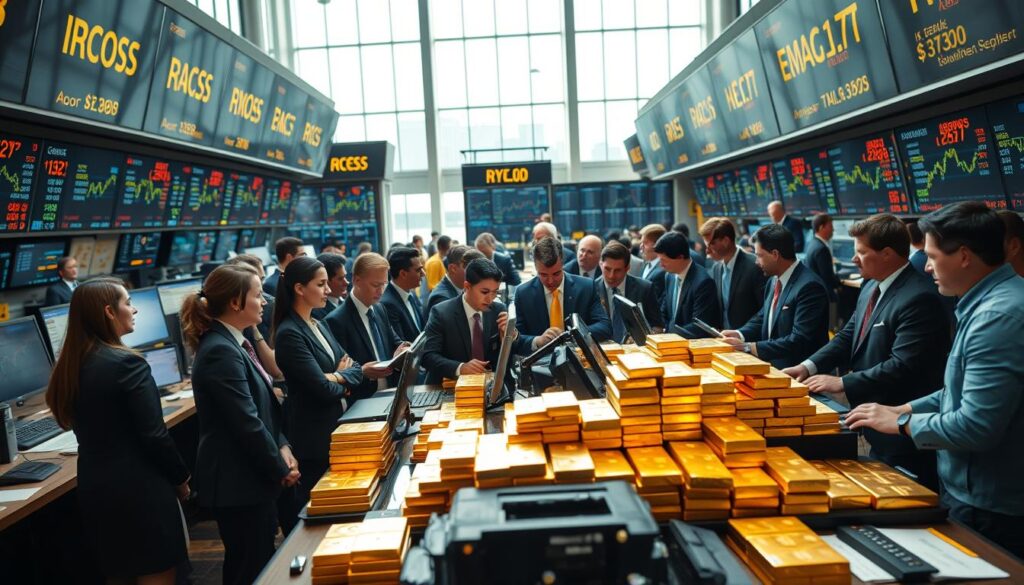
Engaging with the gold market provides traders with valuable insights into one of the most dynamic financial landscapes. To begin, it is essential to understand that the currency code XAU represents the spot price of one troy ounce of gold. This foundational knowledge is crucial for anyone looking to navigate this sector.
The most effective time for trading occurs during the overlap of London and New York sessions, typically between 1 PM and 5 PM GMT. This period often sees peak liquidity and significant price movements.
Beginners should consider practicing on a demo account. This approach allows them to refine their skills without risking real capital. A structured strategy can help traders navigate the market confidently, minimizing emotional decision-making.
Additionally, learning the basics of XAU/USD pairs is a fundamental way to grasp price dynamics. This understanding will pave the way for more informed trading decisions.
Setting Up Your Gold Trading Account
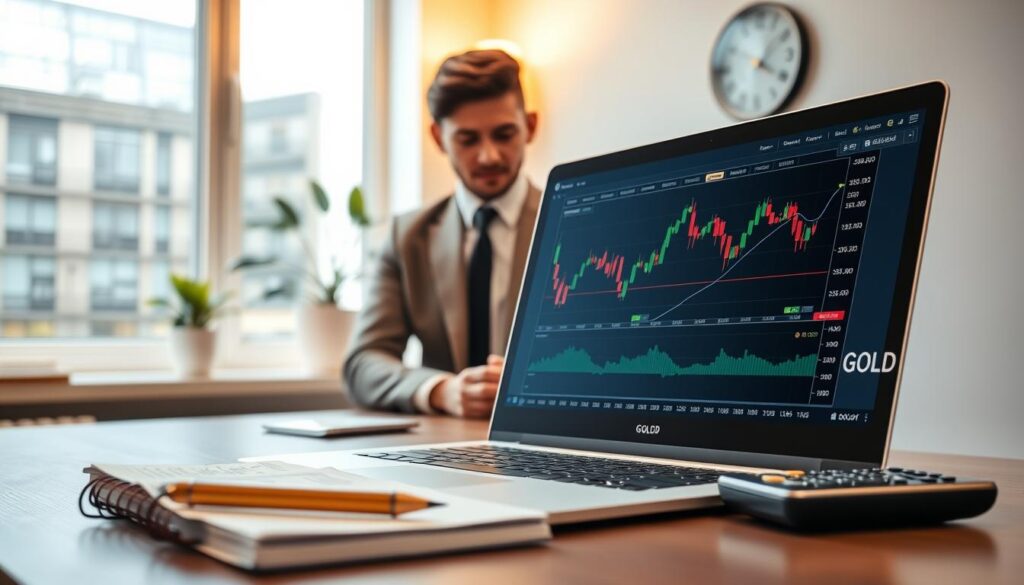
Opening an account with a reputable broker is vital for successful participation in gold trading. This step ensures that traders have access to major exchanges like the COMEX and the LBMA, which are essential for market engagement.
During the registration process, traders must submit necessary documentation to verify their identity. This verification is crucial for the broker to approve the new trading account.
Once the account is verified, funding it allows participants to access real-time data feeds from global hubs like the Shanghai Gold Exchange. Regulated brokers provide a secure trading environment, ensuring the necessary infrastructure for executing trades.
Proper account setup is the foundation for managing risk effectively. It also provides access to professional tools required for successful participation in gold CFDs.
Essential Trading Strategies for Gold

The world of gold trading is rich with opportunities for investors looking to diversify their portfolios. Understanding various strategies can significantly enhance trading success. Each approach offers unique advantages tailored to different trading styles.
Day Trading, Swing Trading, and Trend Trading Explained
Day traders often monitor support and resistance levels to identify potential entry and exit points within the same 24-hour period. This strategy requires quick decision-making and an understanding of market fluctuations.
Swing traders utilize Fibonacci retracements and candlestick patterns to capture medium-term price moves over several days or weeks. This method allows for more extended analysis of price trends.
Trend traders rely on technical indicators like moving averages to assess the strength of a prevailing move in the gold market. Recognizing these trends can lead to informed trading decisions.
Utilizing Technical Analysis and Chart Patterns
Technical analysis allows traders to study historical price patterns. This method helps in making informed decisions rather than relying on impulse or emotion.
Developing a consistent strategy is essential for those using CFDs. This approach helps navigate the volatility inherent in precious metal price movements.
Managing Risk and Controlling Volatility in Gold Trading

Risk management is essential for traders navigating the unpredictable waters of the gold market. Proper strategies can help minimize potential losses and enhance trading outcomes.
Implementing stop-loss orders is a critical technique that automatically limits losses when prices move against a position. This method provides a safety net, ensuring that a trader’s capital is protected.
Understanding margin and leverage is equally important. While these tools can amplify profits, they also increase potential losses. A disciplined approach to capital management is necessary to navigate these complexities.
Setting take-profit targets allows participants to lock in gains at predetermined levels. This ensures that emotions do not dictate exit strategies, leading to more rational decision-making.
Volatility in the gold market can be significant. Traders should avoid over-leveraging their accounts during high-impact news events, as this can lead to substantial risks. Professional risk management involves never risking more capital on a single trade than one is prepared to lose entirely.
Analyzing Gold Price Movements and Economic Trends

The interplay between economic indicators and gold prices shapes the strategies of many traders. As of Q1 2025, the gold price has seen a remarkable increase of over 60% in less than 18 months. This surge can be attributed to various macroeconomic factors.
Inflation remains a primary driver for gold, as investors often seek this metal to preserve their wealth when purchasing power declines. Rising inflation rates can lead to increased demand for gold, pushing its price higher.
Additionally, interest rates set by central banks play a crucial role. They influence the opportunity cost of holding non-yielding assets like gold, affecting its attractiveness in the market.
Traders also analyze the strength of the US dollar, which often shows an inverse correlation with gold prices. Understanding these economic trends helps traders anticipate how the market might react to upcoming data releases or changes in central bank policies.
Using the Right Tools and Platforms

Choosing the right tools can significantly impact a trader’s effectiveness in the gold market. Modern platforms provide essential features that enhance trading experiences. They allow traders to monitor gold trading live, set price alerts, and access advanced risk management tools for precision.
Charting software is invaluable for tracking price movements. It provides the visual data necessary to identify trends across different timeframes in the gold market. This insight helps traders make informed decisions.
Mobile trading apps also play a crucial role. They enable participants to manage their positions on the go, ensuring they can react to market changes in real time. Reliable data feeds are essential for executing trades at the correct price, especially when dealing with the high liquidity of gold CFDs.
User-friendly platforms often integrate technical indicators that assist traders in analyzing the market without needing complex manual calculations.
Evaluating Market Trends and Global Economic Influences
Understanding the influences that shape the gold market is crucial for effective trading. Various factors can significantly impact price movements and overall market sentiment.
Central banks in countries like China, India, and Russia have been aggressively increasing their gold reserves. This diversification strategy reflects their commitment to strengthening national holdings.
Geopolitical tensions, such as the ongoing Russia-Ukraine conflict and instability in the Middle East, often drive investors toward gold as a safe-haven asset. Such dynamics can lead to increased demand and higher prices.
Monetary policy decisions by the Federal Reserve regarding interest rates remain one of the most influential factors for global gold prices. Traders must evaluate how these geopolitical and economic factors create a complex environment that dictates the long-term direction of the market.
Additionally, monitoring central bank demand provides insight into the structural support for gold prices, even during periods of short-term market correction.
Advanced Techniques for Optimizing Your Gold Trades
Traders can enhance their performance by employing advanced techniques tailored for the gold market. These methods not only improve trading efficiency but also help in managing risks effectively.
One significant approach involves using hedging strategies. This allows traders to offset potential losses in their equity portfolios by taking a long position in the gold market. Such a strategy can provide a safety net during market downturns.
Additionally, diversification tactics are crucial. Holding gold alongside other assets reduces overall volatility and risk in an investment portfolio. This approach ensures that traders are not overly exposed to any single asset’s price movements.
- Advanced traders often use gold to hedge against currency devaluation, especially when the US dollar shows signs of long-term weakness.
- By combining different financial instruments, participants can optimize their trades to withstand shifts in global economic conditions.
- Understanding the correlation between gold and other asset classes is vital for professional traders managing advanced portfolios.
Wrapping Up Your Gold Trading Journey
The realm of gold trading invites individuals to explore diverse financial opportunities. A commitment to continuous learning is essential for success in this dynamic market.
By understanding the factors that influence price movements, traders can navigate the market with greater confidence. Whether utilizing spot markets or CFDs, modern platforms offer accessibility to all levels of participants.
Always remember that past performance does not guarantee future results. Maintaining a balanced approach is crucial for long-term success.
With the right preparation and a focus on data-driven decisions, traders can effectively participate in one of the world’s most dynamic markets.